

HAUK: From energy monitoring to an intelligent microgrid
See how automotive supplier HAUK uses FLOWBOX to cut heating gas consumption by 20% and manage energy with solar PV and a 2 MWh battery storage system.
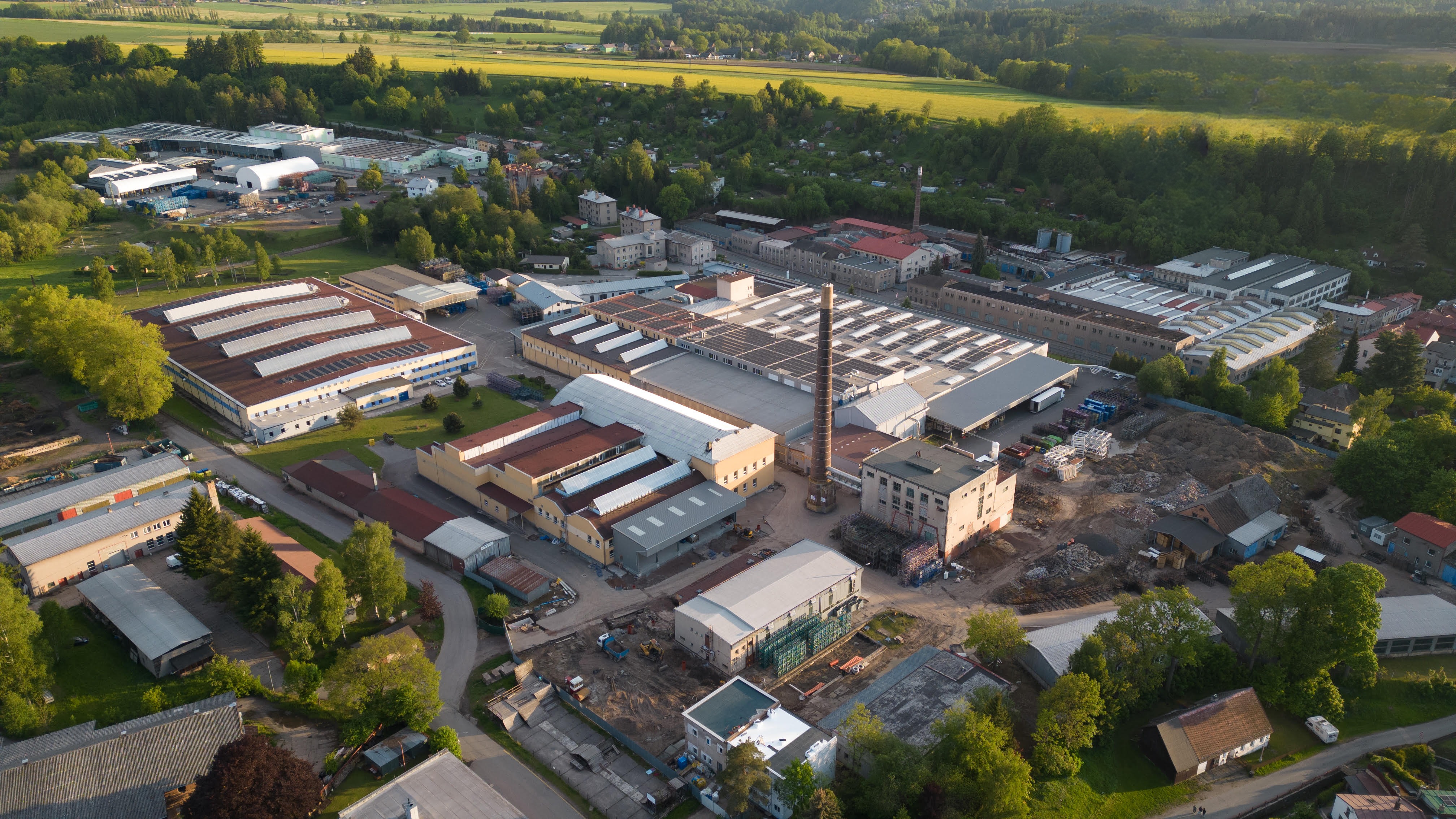
How this ŠKODA AUTO supplier cut gas consumption for heating by 20% and connected energy monitoring, automated equipment control and 2 MWh of battery storage in one platform.
About HAUK
- A family-owned company founded in 1928, originally as a textile mill
- Turnover of CZK 4 billion and 1,000 employees
- Three production plants covering 186,000 m²
- Manufacturer of welded and stamped components for the automotive industry
The partnership between FLOWBOX and HAUK began in early 2024 through Blumenbecker Prag, which had successfully installed the first robotic workstation in HAUK’s press shop a year earlier. Subsequent discussions with HAUK made it clear that reducing energy costs was - and remains - a key priority.
At its production site in Police nad Metují, HAUK consumes approximately 10 GWh of electricity and 10 GWh of gas annually. Energy therefore accounts for a significant share of the company’s operating costs, and its importance will continue to grow as production expands.
Why HAUK took action on energy
- Manual meter readings and cost allocation. Every month-end close involved hours of transcribing readings and calculating costs. A lack of clear metering for tenants on the site also made discussions about energy charges more difficult.
- Wasted heat. Production halls were heated inefficiently, heat escaped through open doors, and waste heat from the presses and compressor room went unused.
- No central oversight. Faults and abnormal operating conditions were only identified once their effects became apparent. For presses, compressors and cooling water systems, this posed a direct risk to production.
- Exposure to peak demand costs. With a site connected at medium voltage, a single unmanaged 15-minute demand peak can affect costs for the entire year.
- An expanding site. Any solution had to accommodate further growth, including a new plant, solar PV and battery storage.
One integration platform for the entire site
The aim was to give a company without an in-house energy manager the tools to take control of its energy use through a single platform that would:
- Digitise existing buildings and production equipment.
- Provide a central overview of faults and abnormal operating conditions.
- Reduce consumption and optimise energy costs.
- Prevent losses by detecting leaks, lights that are off or compressors running unnecessarily.
- Actively control heating, cooling, ventilation and lighting.
- Continuously identify further opportunities for savings.
- Automatically allocate energy costs to tenants on the site.
A key requirement was to build on the equipment and systems already in operation. FLOWBOX EMOS integrates with existing infrastructure. As the site evolves, the FLOWBOX support team updates the mapping of consumption points and sensors to keep the digital model aligned with actual operations.
Implementation began at Plant 2, the former VEBA facility, where FLOWBOX added extensive sensors and metering and introduced the main energy-saving measures. Plant 1, including production, administration, logistics and residential areas, was connected to the same platform.
What the platform measures and monitors
- Electricity, gas and water at both main and submetering points
- Compressed air, including flow measurement
- Temperatures in production halls and water circulating through gas-fired heating systems
- Separate gas consumption for the paint shop and space heating
- Solar PV generation and performance data
- Press shop productivity, including parts produced per shift, efficiency and performance against production targets across dozens of presses
- Compressor condition to support maintenance planning
A Sankey diagram of the site’s energy balance brings all this information together. It shows at a glance where energy flows and where the greatest opportunities for savings lie. Individual operational areas, such as the press shop, toolroom and compressor room, are assessed separately.
From monitoring to measurable savings
Monitoring alone does not save energy. The measurable results came from automated equipment control:
- 20% less gas used to heat production halls
- 15% less electricity used for cooling
- 10% lower peak demand costs
How it works in practice
- Gas-fired unit heaters: Central control uses historical data, weather forecasts and current indoor temperatures.
- Process cooling: The system maintains the cooling water temperature required for production—a critical factor in weld quality.
- Roof vents: Automated operation is coordinated with heating. Night-time ventilation cools the halls and reduces cooling demand during the day.
- Heat recovery: Controlled dampers direct waste heat to where it is needed, while outdoor air is used to cool the halls.
- Lighting: Central control adjusts lighting according to ambient light levels and schedules.
- 15-minute peak demand: Peak shaving combines controllable loads, such as battery charging rooms and cooling systems, with an optimised demand limit.
Coordinating equipment across the site
This is where EMOS goes beyond conventional energy monitoring. It manages the interactions between systems, rather than treating each piece of equipment in isolation.
- Coordinated heat recovery: Waste heat from the presses and compressor room is transferred to the toolroom. During the day, excess heat is discharged outside, with an automated supply of outdoor air.
- Doors linked to heating: Heating switches off automatically when doors open, particularly in warehouse areas, preventing heat from being wasted.
- Control based on historical data: In the welding shop, control settings use average and minimum values from the previous three days.
- Shutdown schedules: Equipment switches off automatically during planned shutdowns.
- Automated ventilation: Windows open and ventilation operates without manual intervention.
Connecting energy use with production performance
FLOWBOX does more than monitor energy at HAUK. The press shop has its own productivity monitoring, showing the number of parts produced per shift through both consolidated reports and detailed views of individual presses. A colour-coded floor plan displays the status and performance of every press at a glance.
Combining energy and production data provides a comprehensive picture of operations—and makes it possible to answer questions such as how much energy is actually required to produce a single stamped component.
Protecting weld quality in real time
In the welding shop, the principle is simple: if cooling conditions fall below the limits required for a particular welding machine and process, the line starts producing defective parts. The defect may not be immediately visible, so an entire batch can be affected before anyone notices.
EMOS monitors cooling water temperature and flow in real time, 24/7. When readings moved outside the configured limits, the system sent a notification, allowing production to be stopped before a defective batch was produced.
This was a real incident. The system helped avoid the costs of scrap and subsequent customer claims.
From energy consumer to active energy manager
HAUK has taken the next step: it now generates and stores its own electricity and decides when to use it. Alongside reducing consumption, the company is significantly reducing its carbon footprint—and the footprint associated with the components it manufactures for ŠKODA AUTO.
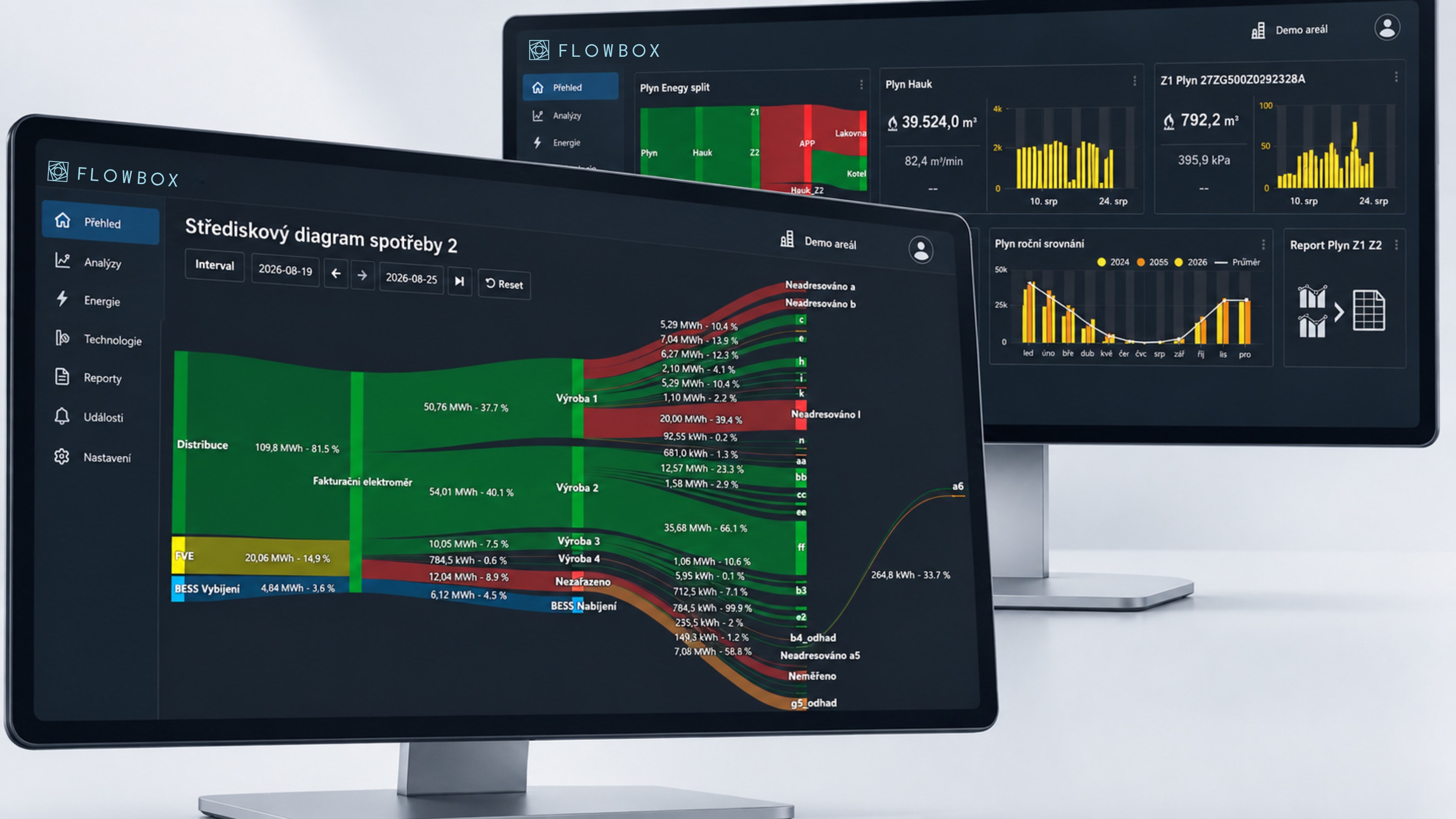
The FLOWBOX Microgrid: Coordinating battery storage, solar PV and peak demand
The site’s microgrid combines:
- 2 MWh of battery energy storage
- 300 kWp of solar PV
- Medium- and low-voltage systems on the same site
- Algorithm-based control in 15-minute intervals
The Microgrid module coordinates the battery energy storage system (BESS), solar PV and peak demand simultaneously. Its decisions are based on weather forecasts, predicted solar generation and forecast consumption.
The battery charges when spot market prices are low and discharges when prices are high. Although connected at low voltage, it helps manage the 15-minute demand peak for the entire plant.
Energy communities and electricity sharing
EMOS manages the use of electricity shared by external suppliers across the group. It provides visibility into electricity imports, exports and surplus generation, along with allocation tables for the generation and consumption points participating in electricity sharing.
The efficiency with which shared electricity is used is reported on an ongoing basis.
Wireless IoT connectivity in selected operations
Installing conventional wired infrastructure throughout the large hall at Plant 2 would have required a significant investment in cabling. FLOWBOX provided coverage across the site with a single LoRa gateway located in the press shop.
The benefits include:
- Remote wireless data collection, including locations where cabling would be costly
- A solution suited to large production halls and equipment spread across the site
- Easy addition of measurement points as the site changes and grows
- Lower installation costs compared with conventional wired infrastructure
What HAUK has achieved
- An end to manual meter readings. Meter readings and tenant cost allocation once took hours. Today, they run automatically.
- Measurable savings. Gas consumption for unit heaters is down 20%, electricity consumption for cooling is down 15%, lighting consumption is down 10%, and costs associated with 15-minute peak demand are down 10%.
- Production protection. A system notification prevented the production of defective parts in the welding shop.
- One platform. Energy, equipment and production productivity are managed in one place.
- Ready for the future. The platform supports 2 MWh of battery storage, a microgrid, energy sharing and the planned development of ISO 50001 capabilities.
- Room to grow. The system can be expanded as the site evolves. FLOWBOX also helps prepare infrastructure, protocols and interfaces for new buildings and refurbishments.
Scalability is essential for HAUK. The site is growing, and following the acquisition of Karsit, the group is set to comprise six production plants. A platform that serves one site must be capable of serving all six.
Phase 3: Unlocking the full potential of EMOS
The next phase focuses on three areas:
- Data Intelligence (DI): Defining energy performance indicators (EnPIs) for meaningful operational groups, training users, and continuously identifying inefficiencies and prioritising corrective measures.
- The new 2027 tariff structure: Assessing the impact of the new tariff structure for large energy consumers and proposing measures to offset adverse financial effects.
- The ISO 50001 module: Digital support for certification, including measurement, monitoring, reporting, automated data validation, an audit trail and the calculation of EnPIs in line with the standard.
“We do not have an in-house energy manager, yet today we manage energy across the site instead of simply paying the bills. FLOWBOX handles much of the control automatically, and when something happens, we find out in time. With FLOWBOX, we always have accurate, real-time information about our energy consumption. We reinvest the savings in expanding the system so that we can achieve even better results.”
Jiří Vlček, Production Director · HAUK s.r.o.